

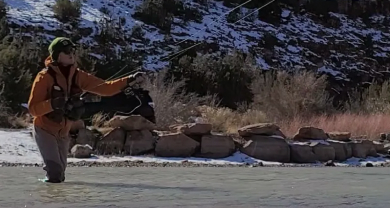


Join Brady as he ties Barr's BWO Emerger, John Barr's emerger for a blue-winged olive hatch. Fish it as the lead fly in a dry-dropper or drop-shot rig.
Barr's BWO Emerger recipe
- Veevus ThreadGray, 14/0
- Tiemco TMC 2487 Hook
- Hareline Superfine Dubbing - Olive
- Hareline Superfine Dubbing - Adams Gray
- Keough Tyer's Grade Cape - Brown
- Hareline Mallard Flank
We matched the colors and sizes used in the video. Change any option, uncheck what you already have, then add it all at once.
Get the new fly every Tuesday
One email a week: the newest Fly Tying Tuesday video, the full recipe and the materials to tie it. 9 years and 500+ videos strong.
More Emergers to tie
See all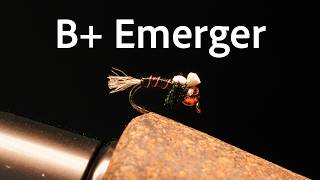 WatchB+ EmergerShop 7 materials →
 WatchHigh Rise EmergerShop 5 materials →
 WatchHilbert's PMD Day Saver EmergerShop 8 materials →
 WatchShuttlecockShop 7 materials →
 WatchBatwing EmergerShop 7 materials →
 WatchTippet Ring KlinkhammerShop 9 materials →
 WatchCDC BWO EmergerShop 5 materials →
 WatchChallenged Biot EmergerShop 6 materials →
Rather fish it than tie it? Shop ready-tied Emergers →
Read the video transcript
Hey, everybody, thanks for tuning in. This is Brady with AvidMax, and today we're going to show you how to tie the Barr's Emerger. To tie this fly we're going to use a few materials here. To start off with our thread, we're going to use the 14/0 gray from Veevus; this is the B05 color code. The hook we're putting this on is the TMC 2487, a nice scud hook.
Then we're going to use a couple different Superfine dry fly dubbings on this fly, even though it is an emerging fly. We're going to use the olive for the body of the fly and then the Adams gray for the thorax. The tail of this fly is going to be utilizing the Keough hackle fibers from a brown cape, and then we're going to put a little bit of mallard flank on as our wing buds for the pattern.
Okay, so we have our hook in our vise, the good old 2487, a go-to scud hook for us here, with a down eye on it. I'm just going to start this gray thread here and lock it on, and then we're going to come right on in and tie in our tail. The tail is going to be those Keough fibers; this is the brown. You can see I've just pulled them off of the stem here, the barbules all facing out 90 degrees.
I'm just going to pull off a few fibers here, trying to keep them as aligned as I can. Even though I'm going to trim them, I still like to keep them in line, because it gives you that same diameter of material when you go to tie it in. But we don't have to worry about how long it's going to be, because we're just going to clip it off; that makes things nice and easy tying this fly. We'll wrap that down and lock it in here.
This is a go-to pattern for sure if you've got a lot of Baetis activity going on and hatching. Maybe they're not quite off the top, but the fish are rising to them still; they may be eating these emergers coming up from the bottom. So I'm going to measure right about the length of the shank there and clip our tails flush, and then we're going to start to dub the abdomen of our body here.
For the abdomen I'm going to use this olive Superfine dubbing. You could use the BWO; we are doing a BWO-style emerger here, and it's a little bit darker than this standard olive. But I find that when I use my dubbing waxes, it tends to darken my material just slightly, so I'm using just the regular olive this time around. You can tie it in variations with grays and greens and browns and different things like that, so it's a wonderfully imitative pattern that can be tied in various color combinations.
So we're just going to work out a nice taper on this fly here, so you can see that, up to the front, right where our abdomen is going to finish off here, a little past halfway on the hook shank there. Then we're going to come in and add our wing bud material. John Barr originally did this with the wood duck, but if you have a hard time finding the wood duck, you can also use this mallard flank; it's a good substitute here for the wood duck.
Then, the same process that we did with the hackle: we're just going to pull these off of the stem here, maybe eight to ten fibers, and then we're going to come in and tie them down. If you're going to do a flashback version of it, you could tie that tinsel in just before this wing bud or wing casing material here. I'm going to leave it a duller variation here, more traditional, and we'll wrap that down. Then we're going to come in here and add our gray dubbing.
This is just the standard gray Superfine that we mentioned, for the thorax of the bug here. I think I got too much; let's get some of that out of here. Well, and I cut my thread by accident, so we're going to fix that. I'm just going to take off a little bit of what I had wrapped down there, hold my thread down and place new locking wraps in here, trying to remove that dubbing.
I clipped my thread by accident; it does happen. We can lock it around here, and we are back to where we were. There we go. So now we can start again with our dubbing noodle, and we're not going to get carried away this time. There we go; that should be just about right.
So we're going to cover up underneath as well as on top here and secure that down, a little bit thinner up at the front so I'm not crowding my hook eye when I get there. Then we're going to pull this mallard flank material forward over the top of that dubbing and flatten it out here. I'm trying to show you; I use my fingertip to flatten it out right on top, and then you can secure it down just like so.
A couple wraps on top, and then we're going to do a couple in front before we come back up on it and separate that out. So we're going to use the same material; I'm going to split it on either side here, trying to get even fibers going both ways. All right, something like that. We're going to pull this one over to the side and wrap it down over here, and do the same thing on the far side, just like so.
We'll give it a quick whip finish here. You can see I'm holding it tight, because I don't want it to slip over the hook eye. I could reposition my hook too, but we're pretty close to the finish here, so we'll just whip finish that off and then clip out our excess there. Then we're going to trim our wing buds short here, so you can pull them back, just slightly longer than your wing casing there, trying to keep them even.
There we are; there's your Barr's BWO Emerger, a great fly to have in your box at all times. Thanks for watching. Be sure to give us a thumbs up and share this video with your friends. If you have a fly you'd like to see us tie in the future, leave us a comment below. For more fly fishing and outdoor-related videos, subscribe to the AvidMax YouTube channel. Thanks for watching, and we'll see you out there.